
MOVEMENT 5 min read
Pilates is easy to misunderstand if you only count repetitions. The method is interested in how you get there: whether the carriage travels because you organised the movement, or because you threw yourself down the rails.
J Pilates uses the language of intentional movement for a reason. This article explains why control, concentration, alignment and awareness are not decorative words — they are the training.
Quick answer
Controlled movement matters in Pilates because springs and a moving carriage will amplify whatever you bring to them. Attention, alignment and a steady tempo help you load the body on purpose instead of with momentum.
Why controlled movement matters
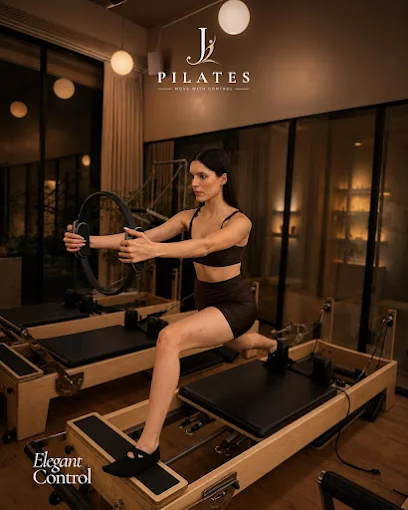
A Reformer does not automatically make exercise precise. It makes exercise honest. If you yank a strap, the carriage tells on you. If you brace and rush, the springs still move — just not in the way the exercise was meant to train.
Control is how you keep the work specific. It is also how beginners stay safe enough to learn: smaller range, clearer path, fewer surprises. That is not timid training. It is skilled training.
Control, concentration, alignment and awareness
Control
You decide the speed of the carriage more than the springs do. Instructors will often ask you to resist the return as much as the press. That eccentric attention is part of the strength.
Concentration
The hour is short. Fifty to sixty minutes is enough if you are actually in it. Distracted movement still burns time; it does not teach the pattern as cleanly.
Alignment
Where the ribs, pelvis and head sit changes which muscles do the job. Cueing exists to organise that, not to make the class sound technical for its own sake.
Awareness
Body awareness is the quiet skill people often notice first: you can tell when a shoulder has crept up, or when you have dumped into the lower back. That skill transfers to desks, walks and other training.
What this looks like in the room
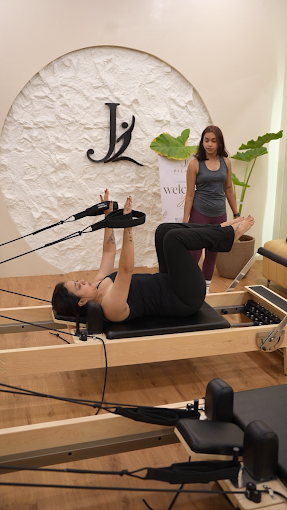
In a J Pilates session you will hear fewer calls to “go harder” and more calls to stay with the path. Private coaching photographs at Ghansoli show that teaching style: one instructor, one client, time to adjust springs and setup.
If you want strength, mobility and awareness as a single idea, continue with Pilates for strength, mobility and body awareness.
Common questions
Does slower mean easier?
Not on a Reformer. Slowing the carriage while springs are loaded asks the body to stay organised. Fast, sloppy travel is often the easier option — and the less useful one.
What if I cannot concentrate for a full hour?
Start where you are. Private teaching can keep the sequence simpler. Attention is a skill the hour trains, not a personality you must already have.
Is this only for advanced clients?
No. Beginners need control even more, because the machine is new. Advanced clients use the same principles with more complex sequences.
Practical guidance
Arrive willing to move slowly. That is not a personality test; it is how the method works.
Each J Pilates session lasts approximately 50–60 minutes. Wear comfortable activewear that allows free movement. Sessions can be rescheduled with at least 24-hour notice.
Book a private session if you want the most detailed cueing, or a Reformer group once you know the carriage. Book through the J Pilates online platform. The same booking path is used for Sanpada and Ghansoli; choose the studio that fits your commute.
Control in a boutique studio hour
Control sounds abstract until you are on the carriage. Then it is extremely concrete. Did the straps stay even? Did the pelvis roll because you meant it to? Did you dump into the shoulders to finish the last inch?
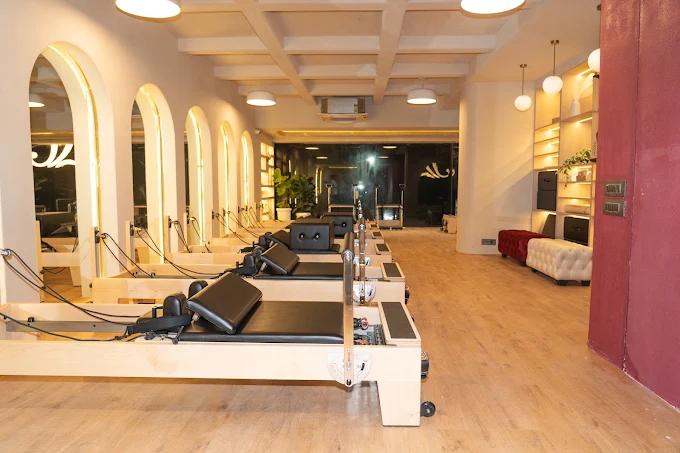
J Pilates photographs of private coaching exist because that is how control is taught: someone watches, then changes a spring or a foot placement. You cannot download that. You can only practise it in a room that values it.
The brand line — move with intention — is not decoration. It is a filter for how loud the class is allowed to become. A boutique Reformer studio that chases only sweat will eventually cue you to abandon the thing that makes the method distinct.
You can still work hard. Hard and sloppy are different. Hard and organised is the target. If you leave unable to remember a single cue, the hour was probably too noisy, even if your clothes are damp.
Carry the idea out of the studio carefully. Controlled movement in Pilates does not mean you must glide through every commute like a dancer. It means you have a clearer sense of what “enough” feels like in a joint, and you can choose not to yank.
Book private Pilates when you want that feedback in high resolution. Book Reformer groups when you can already keep yourself mostly organised and want the shared tempo of a small room.
FAQ
Why does control matter in Pilates?
Control keeps load in the muscles and joints you intend to train. Momentum hides compensation. Pilates uses slower, organised movement so you can feel where effort belongs.
Is slower work less effective?
Not necessarily. Moving slowly against springs still requires strength. The difference is where the work lands.